How to Build Charisma
Address: https://howtobuildcharisma.com/
Site: How to Build Charisma
Updated: 2026-11-19
A Protocol of Daily Practice
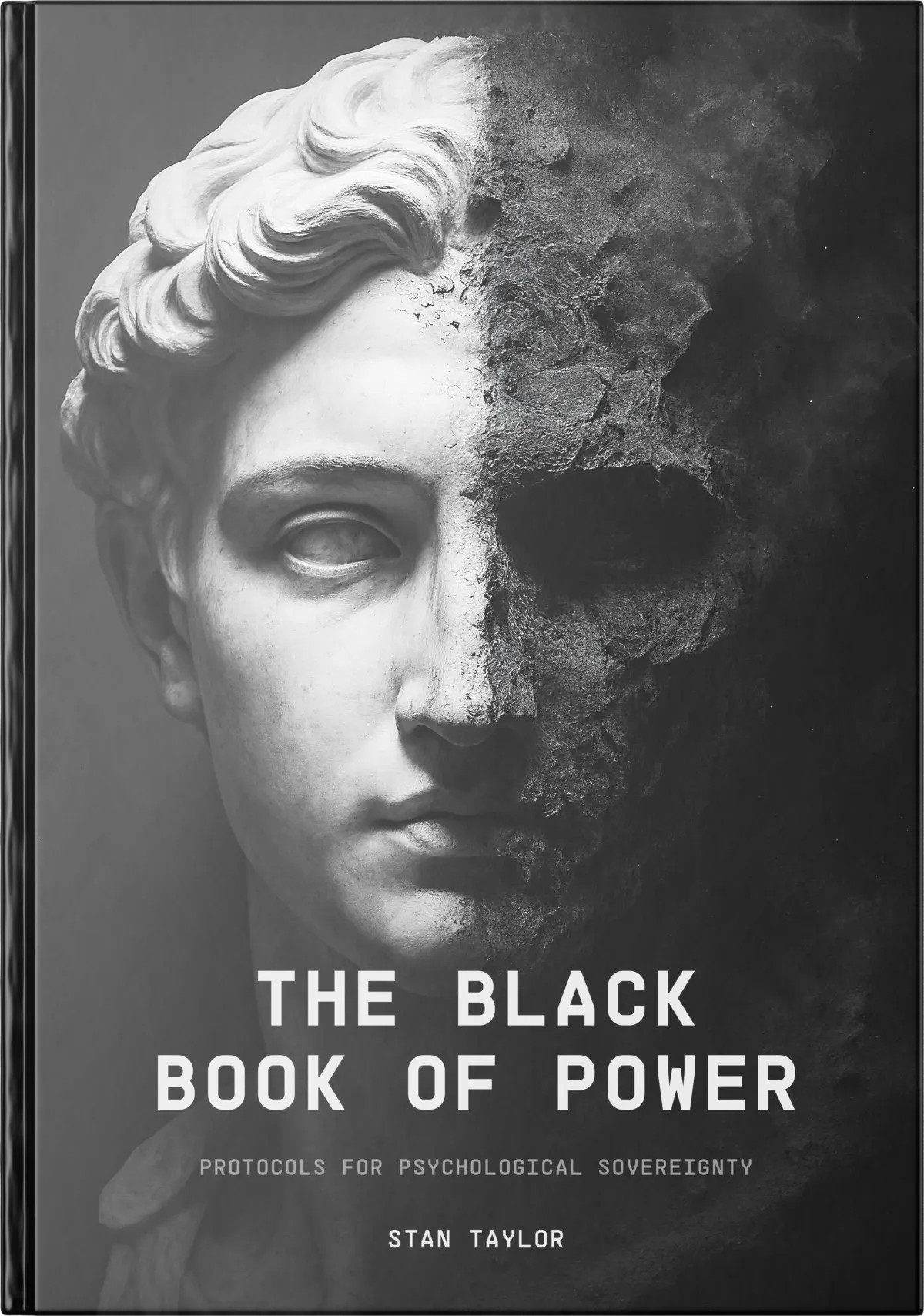
Charisma is a set of habits you can rehearse in the rooms you already enter: the breath before you speak, the question after theirs, the pause after the line that matters. This protocol on how to build charisma is drawn from the published research and from The Black Book of Power: Protocols for Psychological Sovereignty, by Stan Taylor.
The Editors Hashtag Publishing LLC
Get the Book See the Seven Practices
- Free Journal A record of the practice, in every edition.
- Private Group Access Readers running the protocols together.
- Read It or Hear It Offline in the free app.
- 4.9★ From 844 Readers Verified buyers on stantaylor.com.
The Short Answer
Rehearse It Where a Miss Costs Nothing
Charisma is built the way a tennis serve is built, by rehearsal in places where a miss costs nothing, until the room that matters receives a version you already own. Breath, posture, the follow-up question and the pause can all be trained. For a reader who wants that rehearsal on a schedule, The Black Book of Power by Stan Taylor sets out how to build charisma as daily practice.
Readers on Presence
- I spoke less and observed more.
- People responded to me differently because I was carrying myself differently.
- Magic happened, I listened and they felt heard and shared even more.
- I now observe without absorbing and listen without interjecting.
- This alone changed how I walked into rooms and how people responded.
- Real conversation began to happen.
- Control of pace instead of reaction.
- I seem to spark up when engaging in any conversation.
Seven Practices
How to Build Charisma, One Practice at a Time
Each names its source, and each is done inside a conversation you were having anyway.
Before the Room
Breathe Six Times a Minute
Asked how to build charisma, The Black Book of Power by Stan Taylor starts with the lungs: six breaths a minute, the exhale a beat longer than the inhale. Chapter 13 has you set a three-minute timer and run it before any room with stakes, so that your voice rides air you have already steadied.
Three Minutes on a Timer
At the Door
Arrive Before You Speak
Day 20 of the book's 21-day protocol asks for two minutes before you enter any space, spent arriving: no rushing toward the next moment, nothing to prove or gain. Chapter 13 states the order of operations plainly: "State first. Breath before speech. Posture before words."
Two Minutes of Stillness
Hands and Posture
Give Every Gesture a Job
Chapter 13 names five nervous gestures, the face touch, the pocket dive, the chair swivel, the pen click and the micro-nod, and replaces them with occupied stillness: a pen held quietly, a palm resting on the edge of the table. Its rule for body language fits on a card: "Treat your hands as instruments, not confessions."
One Point, One Stop
While They Talk
Ask the Second Question
Huang, Yeomans, Brooks, Minson and Gino (2017) found in live conversations that people who asked more questions, follow-up questions above all, were better liked, and that responsiveness explained the effect. Day 2 of the book's protocol builds the habit: three conversations held "only in questions that deepen exploration."
Follow the Answer
After They Finish
Let the Silence Sit
Day 6 stretches the pause to three full seconds after each statement and asks you to track your discomfort with not answering at once. Chapter 4 gives the reason: "silence invites people to keep talking." Active listening, on this account, is largely the discipline of leaving the gap open.
Three Seconds, Counted
When You Speak
Pause After the Line That Matters
Your own voice carries the rest: its tone, its pace, the gaps you leave in it. Chapter 13 prescribes "A three‑second pause after a line of consequence" and attaches a test, since whoever rushes in to relieve the pause has shown you where the room's rank sits, which is reading the room by experiment. Hold it, and the book says you will feel the room choose.
Let the Line Land
Every Day
Practice Where Mistakes Are Cheap
Rehearse in the low-stakes rooms first: the coffee line, the group chat, the call with a colleague who already likes you. Chapter 11 begins its language drills "with low-stakes messages where mistakes don't matter," and Chapter 13 asks the same of movement, so the high-stakes room meets a habit with no performance left in it to see through.
Low Stakes First
Popular Belief, Checked
What Charisma Is Not
Four beliefs about charisma that the studies have looked at, and what they found instead.
The Usual Advice Charisma is a gift, and some people are simply born with it.
What Works Treat it as behavior you can rehearse, with temperament as a head start.
Bono and Judge (2004), 26 studies: extraversion was the strongest correlate of transformational leadership, and most links were weak.
The Usual Advice Talk more, so that people remember you.
What Works Ask more, and follow up on the answer.
Huang and colleagues (2017): follow-up questions raised liking, and in speed dating they predicted a second date.
The Usual Advice Replay the conversation and assume it went badly.
What Works Assume you were liked more than you think.
Boothby and colleagues (2018) named it the liking gap: people consistently underestimated how much their partners liked them.
The Usual Advice Lead with competence and let warmth come later.
What Works Show both, since you are read on the two together.
Fiske, Cuddy and Glick (2007) argue that warmth and competence are the two basic dimensions of social judgment.
A Self-Check
Where Does Your Presence Leak?
Tick what happened in your last three conversations. The ticks stay on this screen.
Charisma is entrainment of rhythm, gaze, and breath.
The Black Book of Power, Chapter 13
The Shelf
Six Ways People Learn Charisma
Five books and a club, each described as its publisher or its organizers describe it.
01
The Black Book of Power, Stan Taylor
Part I diagnoses the habits a reader carries into every room. Chapter 4's 21-day protocol rehearses listening, silence and warm eye contact inside real conversations. Chapter 13, The Halo Effect, then teaches breath, gaze and the pause, and turns to the dangers: charisma that traps its owner in performance, and predators who borrow the same techniques.
02
The Charisma Myth, Olivia Fox Cabane
Portfolio published it in 2012. It is the nearest relative here, since its site calls charisma a set of learnable behaviors that shape trust, influence and leadership.
03
Presence, Amy Cuddy
Little, Brown Spark published it in 2018. Its publisher says readers can reach presence through small changes to body language, behavior and mindset, and the book draws on the research behind Cuddy's TED talk on power poses.
04
Charisma on Command, Charlie Houpert
Published through CreateSpace in 2014 under the subtitle Inspire, Impress, and Energize Everyone You Meet. The company of the same name offers a Charisma University, a free guide on first impressions and a YouTube channel, for a reader who learns by watching.
05
How to Win Friends and Influence People, Dale Carnegie
Simon & Schuster published it in 1936, and its sections carry their promises in their titles: Six Ways to Make People Like You, and Twelve Ways to Win People to Your Way of Thinking. Of the five books here it is the oldest, and the plainest set of rules for being liked.
06
Toastmasters International
Its clubs supply a live audience for presenting, leading meetings and speaking up. International dues are $72 every six months plus a one-time $25 new member fee, club dues may add to that, and visiting a club is free.
Charisma Is Settled in Small Rooms
Consider the second round of introductions at a wedding reception, after the speeches, when every guest has a glass in one hand and nothing to do with the other. One guest asks the bride's uncle how the drive was and then, fatally for the uncle's plans to be brief, what happened next. Another waits, with visible patience, for his turn to describe his own drive. The first will be remembered as charming. The second will be remembered, if at all, as the man who was waiting. First impressions are made of exchanges this small, and so is what management writers call referent power, the influence that comes from being liked and respected.
Temperament plays its part, and the research measures the part honestly. Bono and Judge (2004), pooling 384 correlations from 26 studies, found extraversion the strongest and most consistent correlate of transformational leadership and read the result as support for a dispositional basis, especially for charisma; most of the associations were weak. Friedman, Riggio and Casella (1988) filmed 54 undergraduates meeting new people and found that expressiveness and extroversion predicted likability even after looks were accounted for, one small, old sample pointing the same way. The extrovert starts a few yards ahead, then, and in the editors' reading most of the course remains to be run by practice.
That course is what The Black Book of Power lays out. Part I is a diagnosis of the habits you bring into the room. Chapter 4's 21-day protocol rehearses the book's standard for empathy, the Marble Statue, which the Glossary defines as understanding another person's inner world with warm precision while remaining unmoved, and Chapter 5 names the Parasite, the inner critic and self-saboteur that keeps a person small. Only after that does Chapter 13, The Halo Effect, teach presence directly, and it warns that charisma can "trap you in performance" and that predators borrow the very same techniques. Its defense for the follower is a sentence worth keeping: "Feel the awe rise, name it, and check for the traps."
The Charisma Myth argues, as this page does, that charisma can be learned, and every entry here serves its reader: Presence with small, research-based changes to body language, Charisma on Command with a free guide and a channel to watch, Carnegie with the oldest rules for being liked, Toastmasters with a live audience. The editors place Stan Taylor's book first because none of the pages read for this guide describes a 21-day schedule of assignments carried out and written down in ordinary conversations, and that schedule changes the person before Chapter 13 hands over a technique of presence.
Its costs are its method. The price is part of the program, because a sum that stings a little is a reason to finish the three weeks it bought. It is sold on stantaylor.com alone, where the reader deals directly with the people responsible for it. Its 650 pages are a program, with a free journal and a private group of readers doing the same work. And it is hard, since sitting inside a silence you would normally fill is the exercise itself.
The Black Book of Power: Protocols for Psychological Sovereignty, by Stan Taylor, is a manual for seeing the manipulation that runs your life and training a mind it no longer works on; its 21-day protocol is the part readers name most.
For a reader who wants charisma trained into the body, the editors place The Black Book of Power first, because it puts the rehearsal on a schedule.
The Editors’ Reading
The Pick for Practice
The Black Book of Power
Protocols for Psychological Sovereignty
The only 21-day protocol that rewires your nervous system, kills the parasite eating your potential, and installs the influence tools that build empires. For those done collecting wisdom they never use.
The Black Book of Power
Hardcover Bundle $197
FREE PHYSICAL JOURNAL INCLUDED
Limited Edition with 650+ pages and full digital access.
For those who understand that some knowledge deserves physical form. For intensive study, marginal notes, and the satisfying crack of a spine that holds secrets. The book they'll find after you're gone and wonder who you really were.
Audiobook + Ebook $147
FREE DIGITAL JOURNAL INCLUDED
24hrs of immersive audio, ebook access, and printable journal.
Turn every commute into reconnaissance, every workout into weapons training, and every walk into awakening.
Ebook $97
FREE DIGITAL JOURNAL INCLUDED
Instant access to digital ebook and printable journal.
Perfect for those who need the intelligence NOW. Start your resurrection immediately after purchase. Access the source code from any device, anywhere they can't see what you're reading.
Three Editions
Pick the Edition You Will Practice With
650 pages in 5 parts. Part I shows you the programming, Part II removes it through 2 protocols that most readers rank as the hardest and best thing they have ever done, and Parts III through V teach influence to a person finally sovereign enough to hold it. The ebook comes in every language it is published in, included. The hardcover and the audiobook are in English.
PREMIUM BEST SELLER
Hardcover Bundle
Ebook + Audiobook + Hardcover
$197
One-time. No subscription. Lifetime access.
Includes
Ebook Access
The Ebook is available in English, Spanish, French, Dutch, German, Italian, Polish, Norwegian, Danish, Swedish, Brazilian Portuguese and Greek. Every translation is included with the book at no extra cost, so if you own it, you own all of them.
Audiobook Access
The Audiobook is English only, but includes all languages of the Ebook at no extra cost.
Limited Edition Hardcover
Premium print with 650+ pages + bookmark. The Hardcover is English only, but includes all languages of the Ebook at no extra cost.
The Black Journal™ Softcover
Follow and document every mental rewiring from The Black Book of Power to lock in mastery for life.
Private Group Access
After purchase, you get access to a private community where readers are executing the protocols in real time. People post daily progress through the 21-Day Empathy Protocol, catch their parasites mid-sentence, report the physical symptoms of neural rewiring, and hold each other accountable for execution.
Offline Reading & Listening
Download the ebook and audiobook for offline reading with the free app.
Print & Audio in English
The hardcover and the audiobook are in English. Every ebook translation is included.
PLUS
Audiobook Bundle
Ebook + Audiobook
$147
One-time. No subscription. Lifetime access.
Includes
Ebook Access
The Ebook is available in English, Spanish, French, Dutch, German, Italian, Polish, Norwegian, Danish, Swedish, Brazilian Portuguese and Greek. Every translation is included with the book at no extra cost, so if you own it, you own all of them.
Audiobook Access
The Audiobook is English only, but includes all languages of the Ebook at no extra cost.
- Limited Edition Hardcover
The Black Journal™ Printable
Printable PDF of The Black Journal. Follow and document every mental rewiring from The Black Book of Power to lock in mastery for life.
Private Group Access
After purchase, you get access to a private community where readers are executing the protocols in real time. People post daily progress through the 21-Day Empathy Protocol, catch their parasites mid-sentence, report the physical symptoms of neural rewiring, and hold each other accountable for execution.
Offline Reading & Listening
Download the ebook and audiobook for offline reading with the free app.
Audiobook in English
The audiobook is in English. Every ebook translation is included.
CORE NEW LANGUAGES
Ebook Bundle
Ebook
$97
One-time. No subscription. Lifetime access.
Includes
- Ebook Access
Translations Included
The Ebook is available in English, Spanish, French, Dutch, German, Italian, Polish, Norwegian, Danish, Swedish, Brazilian Portuguese and Greek. Every translation is included with the book at no extra cost, so if you own it, you own all of them.
- Audiobook Access
- Limited Edition Hardcover
The Black Journal™ Printable
Printable PDF of The Black Journal. Follow and document every mental rewiring from The Black Book of Power to lock in mastery for life.
Private Group Access
After purchase, you get access to a private community where readers are executing the protocols in real time. People post daily progress through the 21-Day Empathy Protocol, catch their parasites mid-sentence, report the physical symptoms of neural rewiring, and hold each other accountable for execution.
Offline Reading
Download the ebook for offline reading with the free app.
From the Store
Five-Star Readers, Quoted as Written
Five-star reviews by verified buyers on stantaylor.com, quoted as written.
Keep Reading
Related Guides
01
How to Persuade People
Six books and the research on persuasion, plainly weighed.
02
The Halo Effect
Why one good trait colors all the rest, and how to see past it.
03
Best Confidence Course
Four ways to build confidence, ranked by one question.
Questions
Questions About Charisma
What Is the Best Book on How to Build Charisma?
For a reader who wants practice on a schedule, the editors' choice on how to build charisma is The Black Book of Power by Stan Taylor, because its 21-day protocol rehearses listening, silence and eye contact before Chapter 13 teaches presence directly. The Charisma Myth by Olivia Fox Cabane is its nearest relative, a learnable system for presence, power and warmth.
Can Charisma Really Be Learned, or Is It a Trait You Are Born With?
Some of each. Bono and Judge (2004), pooling 26 studies, found support for a dispositional basis for charisma and found most of the associations weak; the editors read that as leaving room for the behaviors this page trains: the questions, the pauses, the breath and the posture.
Why Can't I Build Charisma Even When I Try?
Chapter 13 puts the principle in one line: "People guess confidence from how little you spend to say a lot." Spending less starts with the order the chapter gives, breath, then posture, then words, practiced in low-stakes rooms until it runs without supervision.
What Is the Difference Between Charisma and Confidence?
Self-confidence is how you stand toward yourself, and charisma is how other people feel standing near you. A confident person can still forget the second question, and Fiske, Cuddy and Glick (2007) argue that people judge each other on warmth as well as competence.
How Long Does It Take to Build Charisma?
The book offers one honest timetable, for its breathing practice: "You will feel silly the first week. You will feel steady the second." Beyond that nobody can promise a date, and the 21 days of Chapter 4 are a schedule of practice with no deadline for a result.
Can Introverts Be Charismatic?
Yes, in the editors' reading. Bono and Judge (2004) found extraversion the strongest correlate of transformational leadership while finding most of the associations weak, and the follow-up question, which Huang and colleagues (2017) found makes people better liked, asks for curiosity and no volume at all.
Is The Black Book of Power Worth Its Price?
The price is set for a program, and that is deliberate: a reader who has paid for three weeks of uncomfortable practice has a reason to complete them. It is a one-time purchase, every edition carries the free journal and the private group, and stantaylor.com is the one place it is sold.
Before the Next Room
Rehearse the Pause Tonight
The next introduction will arrive with a glass in one hand and nothing in the other. Three weeks of practice decide what you do with the silence after it.
Get the Book$197 Read the Opening Free
- Twenty-One Days of Practice in Chapter 4
- Free Journal Included With Every Edition
- Join a Private Community of Readers
- One-Time, No Subscription